MAIN REFERENCE WORKS:
 |
 |
 |
|
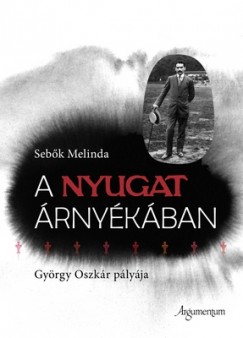
Sebők Melinda: György Oszkár pályája >> characteristic teacher, translator of the 1920s introducing French symbolism to the Magyar (Hungarian) literary world Publsiher: Argumentum Kiadó ISBN: 9789634466352 grammar, prosody, proofreading & stylistic editing www.irodalomismeret.hu/files/2016_4/bakonyi_istvan.pdf
|
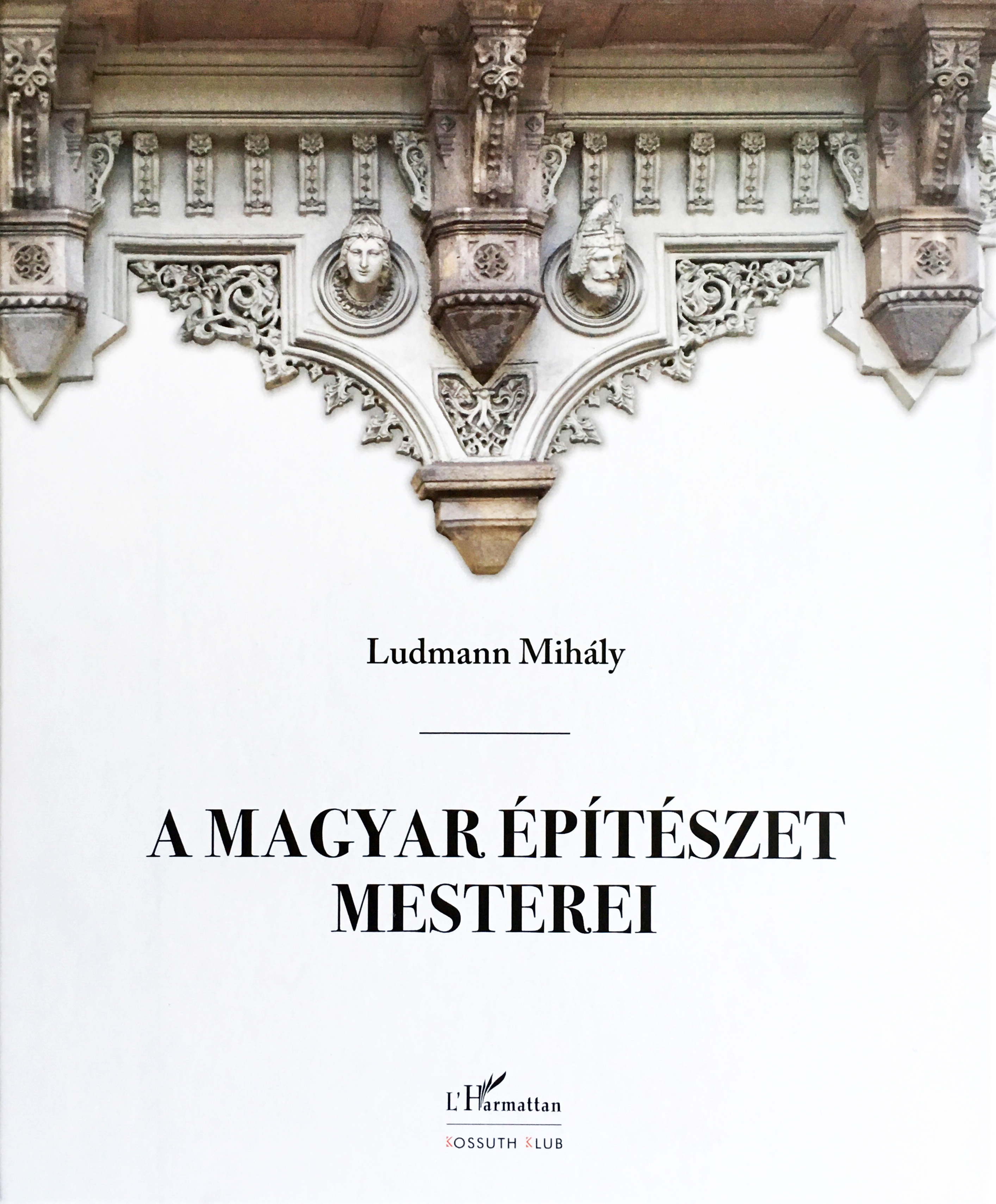
Ludmann Mihály: A magyar építészet mesterei (2014) >> presenting 100 years of architecture in the Carpathian Basin with biographies and illustrations Publisher: L'Harmattan Kiadó ISBN: 9789632368450 historic content supervising & editing preparation process |
Földvári András: Elmentem világgá (2020) >> most traveled airlines marketing expert visiting 1000+ airports, his personal stories Publisher: 21. Század Kiadó ISBN: 9786156122988 grammar, proofreading, stylistic & creative editing |
FURTHER COOPERATIONS:


Muladi Brigitta: Jovián György (2011)4 Erdődy Kristóf: Debreczeni Imre (2013)5
>> indepth analysis of György Jovián's academic art >> in defense of Imre Debreczeni's diploma exam,
by art historian and curator Brigitta Muladi booklet in support of the fine artist, underscoring his theories
Publisher: Petőfi Irodalmi Múzeum Publisher: Student Board for the Fine Arts University of Budapest
ISBN: 2310009531763
artistic evaluation, contribution
Details:
https://www.galeriafaur.hu/artists/jovian-gyorgy
https://exindex.hu/hu/event/a-rozsda-dicserete/
https://www.mmakiado.hu/kiadvanyok/jovian

Erdődy Kristóf: Dr. Kubassek János geographer (biography)1 Erdődy Kristóf: Charles Bukowski poetry anthology in Hungarian2
>> the story of professor and museum director Kubassek, >> focusing on poverty, drinking, gambling, and dysfunctional relationships,
with a degree in history and geography, often through his alter ego Henry Chinaski, becoming a cult figure
co-founding the Museum of Geography, Hungary. for his brutal honesty and accessible language that championed
Encouraged by Dénes Balázs, he began researching the common man's struggles against societal pressures,
the museum relics of Hungarian travelers and out of context of the slums he dwelled in, author Bukowski
geographical explorers. Public member of the has been often criticized for his bias on personal detriment.
Hungarian Academy of Sciences. Fulbright Scholar An underground writer who managed to depict the depravity
at the Smithsonian Institute in Washington, D.C. of urban life and the downtrodden in American society.
Member of a dozen important scientific expeditions, This book aims to bring together various translators
first author to summarize Taiwan's geography who have worked with Bukowski's literary output.
and history in one book. Professor Kubassek has visited Check: www.poetryfoundation.org
100+ counties and has pubished around 30 books. for further introductive details on Bukowski's works.
[ in opere processus ] [ state: rights issues debates, blocked by
corruption and parochialism within the literary circles in Budapest ]
Planned release: 2027 Planned release: postponed since 2021
1ABOUT János Kubassek:
János Kubassek, geographer, head of the Hungarian Geographical Museum since 1983. Graduated in Debrecen as a history and geography teacher and received his PhD from the University of Pécs in 2005. His main research areas include the history of science,Hungarian travellers, and the activities of geographical explorers. He was a member of the Hungarian Scientific Africa Expedition (1987–1988). Dr Kubassek was a visiting scholar in South Korea in 1991 and a Fulbright visiting fellow in Washington DC in 2006 doing research in the Library of Congress and the Smithsonian Institute. He is the author and editor of 28 books, and published more than 300 articles. He is also the editor-in-chief of the journal Földrajzi Múzeumi Tanulmányok (Papers of the Geographical Museum).
2ABOUT Charles Bukowski
Charles Bukowski, German-American poet, novelist, and short story writer known for his works about the lives of ordinary Americans, work, alcohol, and relationships. Born in Germany in 1920, he immigrated to the United States as a child and lived most of his life in Los Angeles, which heavily influenced his writing. Charles Bukowski's "CV" is not a traditional one, as he was a writer whose life was defined by his literary career and personal experiences rather than a corporate resume. His professional life was marked by a period of non-writing employment, including his long tenure at the post office, and a later career as a full-time author after the age of 35, according to Britannica and Poetry Foundation. His "career" also includes a history of personal struggles, relationships, and his prolific body of work, which includes novels, short stories, and numerous books of poetry.
3ABOUT György Oszkár
The life and literary career of György Oszkár have remained unexplored to literary history and the reading public. Despite the fact that between 1901 and 1906 he embarked on the path of becoming a poet at the Faculty of Humanities in Budapest together with Mihály Babits, Dezső Kosztolányi, Gyula Juhász and Gábor Oláh; György Oszkár later found himself on the periphery of literary life. Although his attempts at winging appeared at the same time as those of the first generation of lyricists of Nyugat*, his literary career remained in the shadow of Nyugat instead of at the forefront. Despite his translations of Baudelaire and Verlaine, and his three published collections of poetry (In memoriam, Secrets, The Endless Row of Trees), he never received any real recognition during his lifetime. The undeservedly forgotten poet-writer-translator found his home in Székesfehérvár from 1920. As a teacher at the Ybl Miklós Real School, he continued to write and translate a lot, as before, and kept in touch with his poet friends through correspondence.
The fragmentary legacy of György Oszkár represents a remarkable value in Magyar / Hungarian literature. As a result of several years of research, this monograph takes stock of the most important stages of his life and creative career, from his first poems to the poet's tragic climax. Each chapter presents György Oszkár's versatile work: his writing and editorial activities, his talent as a translator, and his exemplary teaching personality. The author's work is of significant importance both for our knowledge of 20th-century Hungarian literature and for the cultural history of Székesfehérvár.
* Nyugat folyóirat / Nyugat magazine (1908-1941)
4ABOUT Jovián György
He completed his secondary education at the Music and Art Vocational School in Oradea (1966–1970). After graduating, he went to Bucharest to study at the Nicolae Grigorescu College of Fine Arts (1970–1974). After receiving his diploma, he became a master's scholarship holder at the college (1975–1975). From 1975, he worked as a packaging designer, and from 1977 to 1981, he was a guest set designer at the Oradea State Theatre. He had solo exhibitions in Oradea, Cluj-Napoca and Bucharest. In 1982, he moved to Hungary, where he received various domestic and foreign scholarships (Gyula Derkovits Fine Arts Scholarship, 1983–1985; Scholarship of the Hungarian Academy in Rome, 1985; Scholarship of the Austrian Ministry of Culture, 1991, 1995; Magyar Hitelbank scholarship, 1991–1992; Lisbon scholarship in the international artist exchange program of the Budapest Municipality, 2002; Cité Internationale des Arts, Paris scholarship, 2008) helped his creative work. At home, he was a graphic designer at the Játékszín between 1983–1996, and at the Merlin Theatre between 1996–1999, and has been an employee of the Petőfi Literary Museum since 1999.
His painting and graphic art is close to the new eclecticism, building on various earlier style periods. His paintings are characterized by fine workmanship and rich elaboration of details, through which he presents mythological, philosophical or even everyday messages. The correspondence of colors and lights, the inclusion of photographs and a specific abstraction complete his painterly and graphic toolkit; he is a prominent creator of series.
5ABOUT Imre Debreczeni
A sci-fi tourist who explores the human side of galaxies from a subjective perspective. He has settled into an imagined future, where sometimes symbols from well-known films can be found. Realistic physical laws rule the depicted space locations, giving weight to what is essential. His studies 2000-2001 Tömörkény István High School and Art Vocational High School 2001-2006 Békéscsaba Evangelical High School and Art Vocational High School 2007-2013 Hungarian University of Fine Arts (painting department, József Gaál class). www.muveszetekhaza.hu (2014)
Selected group exhibitions 2013 Pakistan National Council of the Art, (Islamabad) 2012 7DAYS, Gozsdu udvar, (Budapest) 2012 Night of Museums, MKE, (Budapest) 2011 Budapest Stream, Virág Judit Gallery (Budapest) 2011 Ari Kupsus Gallery (Budapest) 2011 New Creative Workshop closing exhibition (Tiszakécske) 2011 Old Students, Vigadó Gallery (Békéscsaba) 2011 Master and his disciples, Karinthy Salon(Budapest) 2010 Hungarian Culture Day (Nyíregyháza) 2009 Reflection on the exhibition Textus-Contextus, MKE (Budapest) 2009 Falk Art Forum(Budapest) 2009 Ji-King exhibition, MKE (Budapest)
Solo exhibitions 2012 Rosaceae, (Debreczeni Imre, Horváth Roland, Pinczés József) MAZART Gallery, (Budapest) 2012 The forest is playing music! (Pásztó) 2011 Transcendental Romance Körönd Gallery (Budapest) 2011 Károlyi Castle “Music and Painting” organized by Ari Kupsus Gallery (Fehérvárcsurgó) 2011 CD Fű-Kultúrpince (Budapest) 2009 Artkatakomba with Artattack Horror Pista (Budapest).